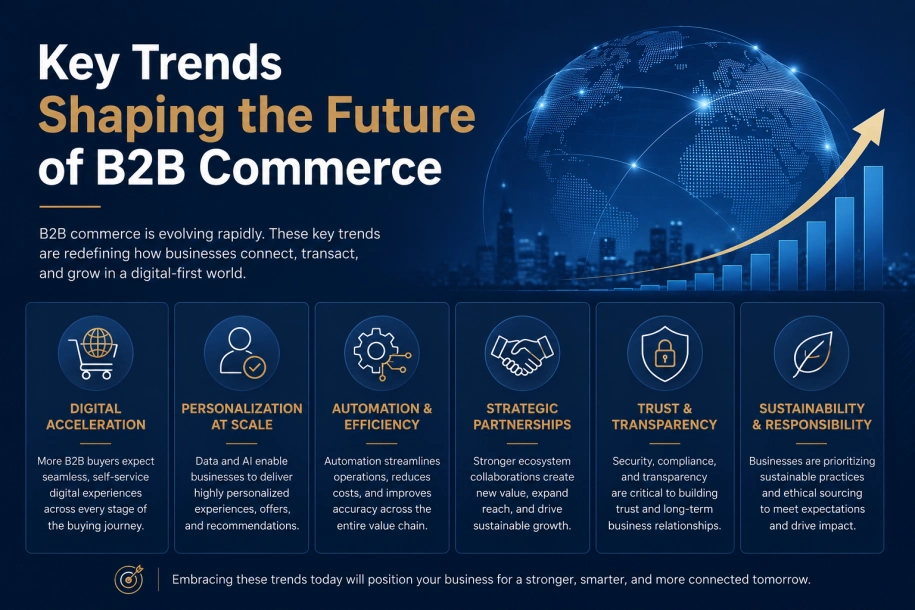
B2B commerce continues to evolve under the influence of digitalization, changing buyer expectations, and macroeconomic pressures. Several structural trends are redefining how companies buy and sell. First, self-service and digital channels are becoming the preferred interaction model for a growing share of routine purchases. Second, buyers increasingly expect consumer-grade experiences, including transparent pricing, real-time availability, and seamless order tracking. Third, sustainability and supply-chain resilience have moved from secondary considerations to core evaluation criteria in many procurement decisions. Organizations that recognize these shifts early and adapt their commercial models accordingly will be better positioned to capture market share. Those that delay risk gradual erosion of relevance as customer expectations continue to rise.
Industry Insights
Aug 31, 2026